For everyday driving
Union Carbon IR
- 75%
- infrared heat
- 61%
- total solar energy
- 99.99%
- UV
A carbon film with an infrared layer: real heat control, a deep black that holds its color, and no metal to upset your phone or GPS.
Open today9 AM – 6 PM

Car tint
Union Ceramic IR is built to turn away infrared heat without relying on a dark shade — and with no metal in the film, your phone and GPS work as normal.
How ceramic works
Infrared is the part of sunlight you feel as heat on your skin, the seats and the steering wheel. Union Ceramic IR builds on a carbon-particle film with an added ceramic layer aimed at that infrared. Union’s spec sheet lists it at 87% infrared rejection, 65% of total solar energy rejected and 99.99% UV rejection; real-world performance varies with the shade and your glass.
Shade and heat are separate choices. The shade, from 5% to 70%, decides how dark the glass looks and how private the car feels; the film decides how much heat it turns away. So a lighter ceramic can still make a real difference to how the cabin feels on a hot afternoon. Ceramic IR has no metal in it, so it won’t interfere with your phone, GPS or radio.
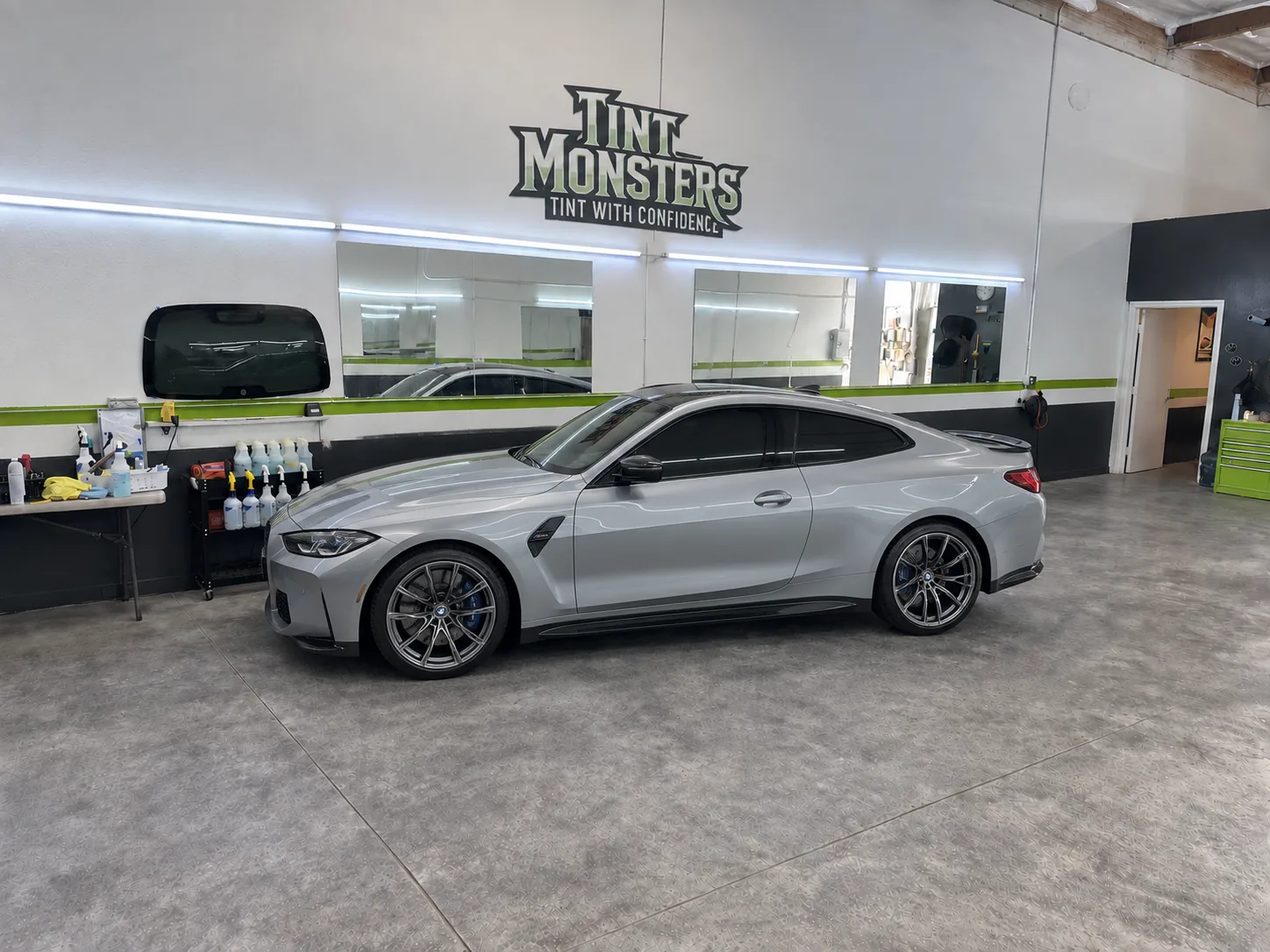
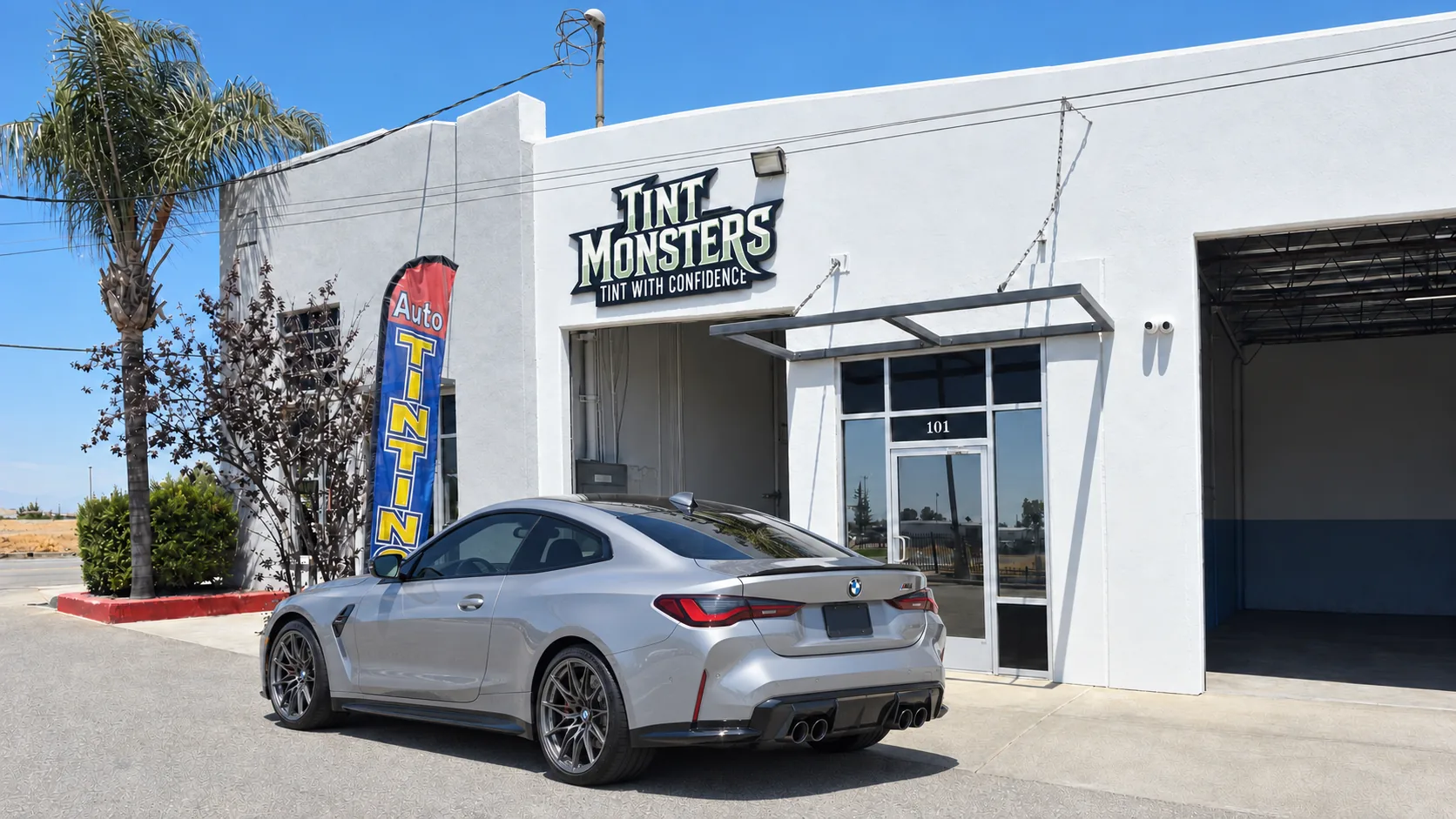
Ceramic at Tint Monsters
Why drivers choose ceramic
Ceramic is the step up when heat is what bothers you most. Here’s what you get for it.
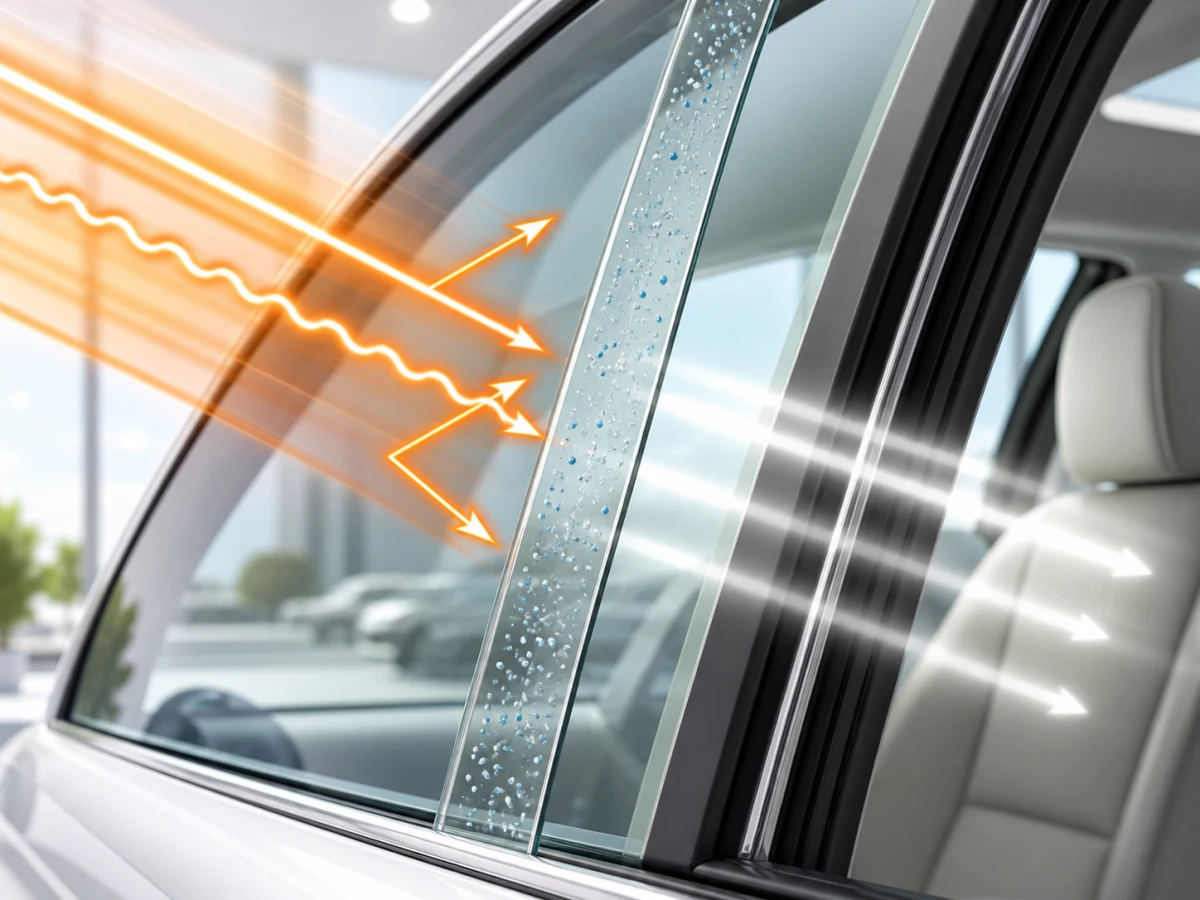
Union lists Ceramic IR at 87% infrared rejection against 75% for Carbon IR, and 65% of total solar energy rejected against 61%. On a car parked in the Inland Empire sun, that gap is the part you feel. Results vary with shade and glass.
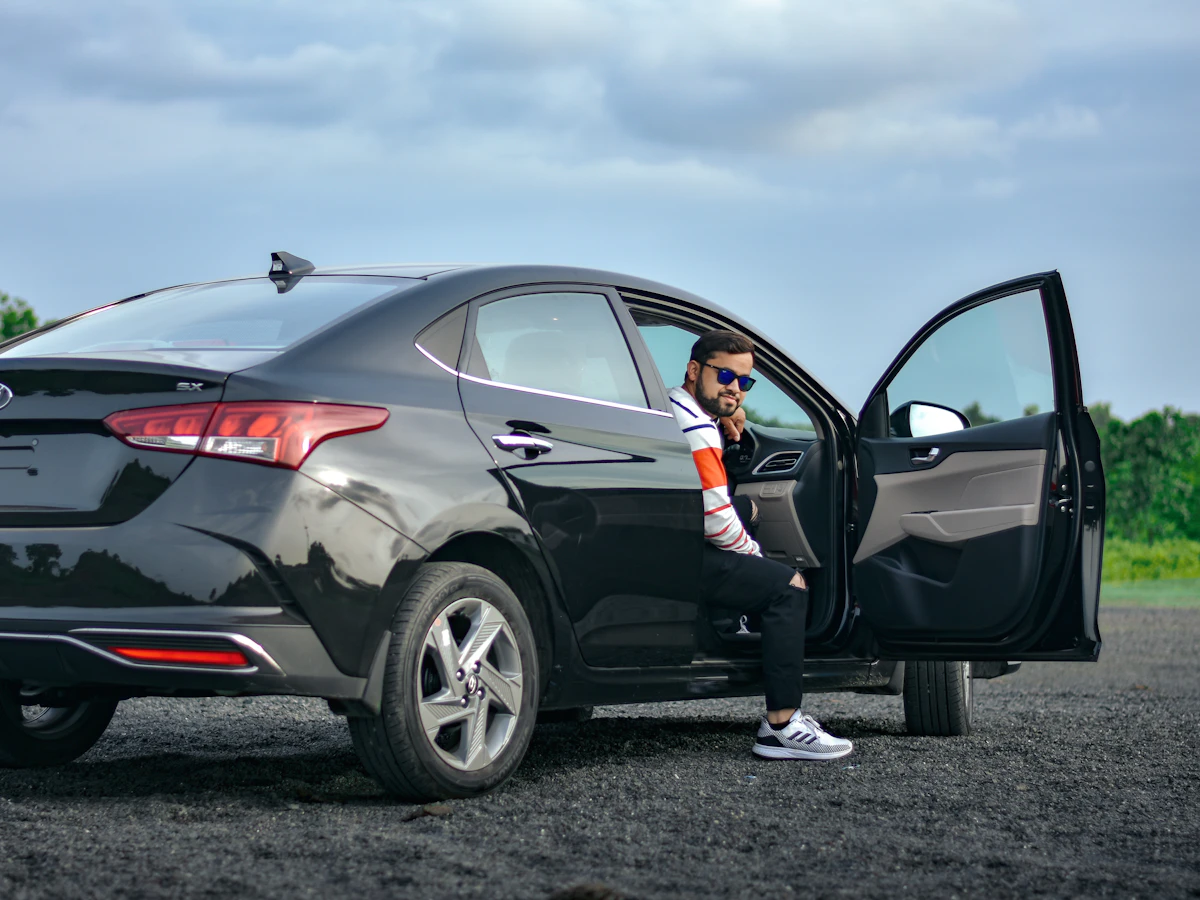
Because the ceramic layer targets infrared rather than visible light, you don’t need the darkest shade to feel cooler. Choose the look you like — subtle or dark — and let the film handle the heat.
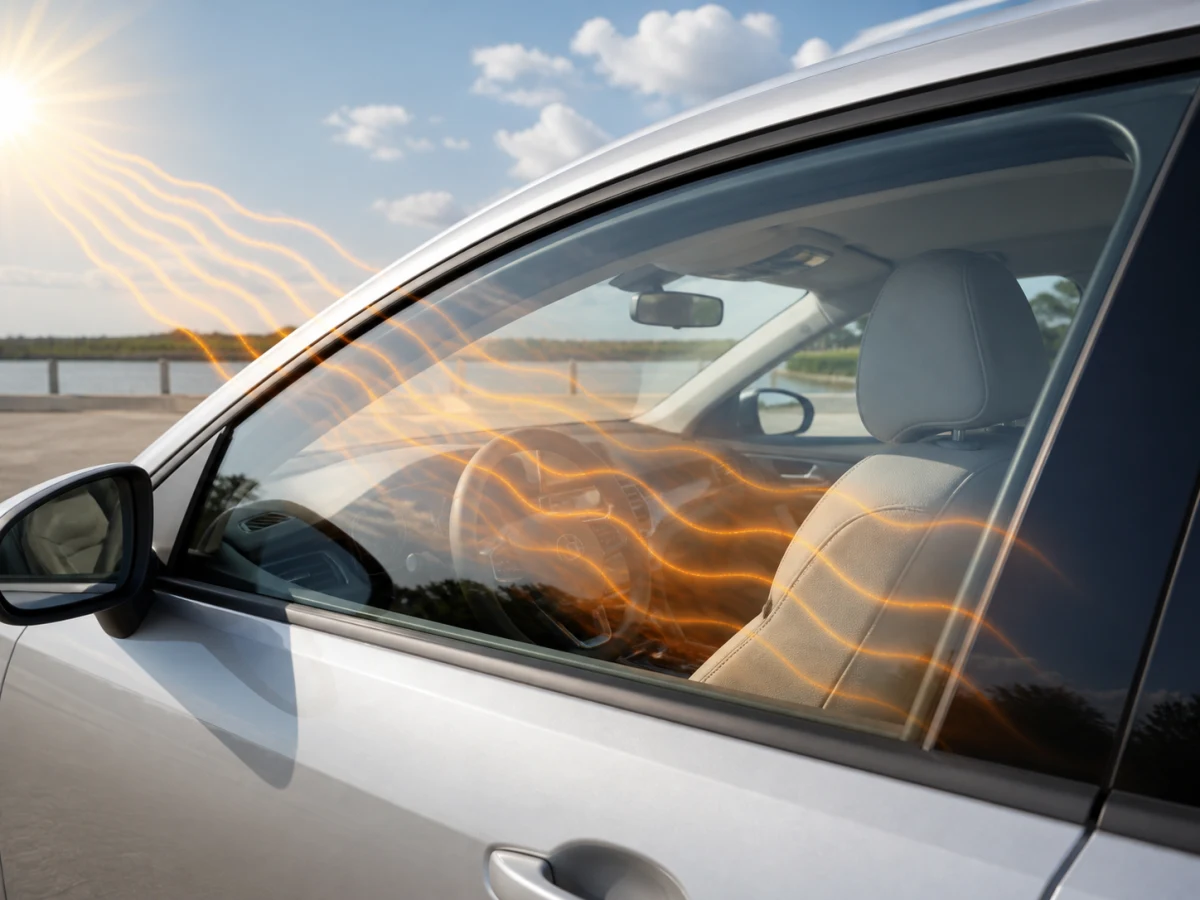
There’s no metal in Ceramic IR, so it won’t interfere with your phone, GPS, radio or keyless entry. That matters on newer cars and EVs that lean on wireless connections for maps, music and phone keys.
On Union’s published figures, Ceramic IR rejects 99.99% of UV, helping protect your skin on long drives and slowing the fading and cracking of leather, dashboards and trim. Figures vary with shade and glass.
Commuters in full sun, cars parked outside all day, kids or pets in the back seat, EVs and anything with a glass roof. If heat through the glass is your main complaint, ceramic is where to start.
Ceramic IR carries Union’s lifetime warranty against film defects such as bubbling, peeling, cracking and fading, under the manufacturer’s terms. Scratches, damage and misuse aren’t covered. If anything looks wrong, contact us and we’ll take a look.
Side by side
Both are Union films we fit at our Menifee shop, both block 99.99% of UV and neither contains metal. The difference is how much heat they turn away. Figures are Union’s published specs and vary with shade and glass.
Our films
Switch between Union Ceramic IR and Carbon IR to see how much infrared heat each one turns away and the shades they come in. We’ll help you choose the right ceramic tint for your car, fitted indoors at our Menifee shop.
For everyday driving
A carbon film with an infrared layer: real heat control, a deep black that holds its color, and no metal to upset your phone or GPS.
The most heat we can block
Carbon with a ceramic layer on top for the strongest heat rejection Union makes — the one to choose when the Inland Empire sun is the problem.
The Menifee shop
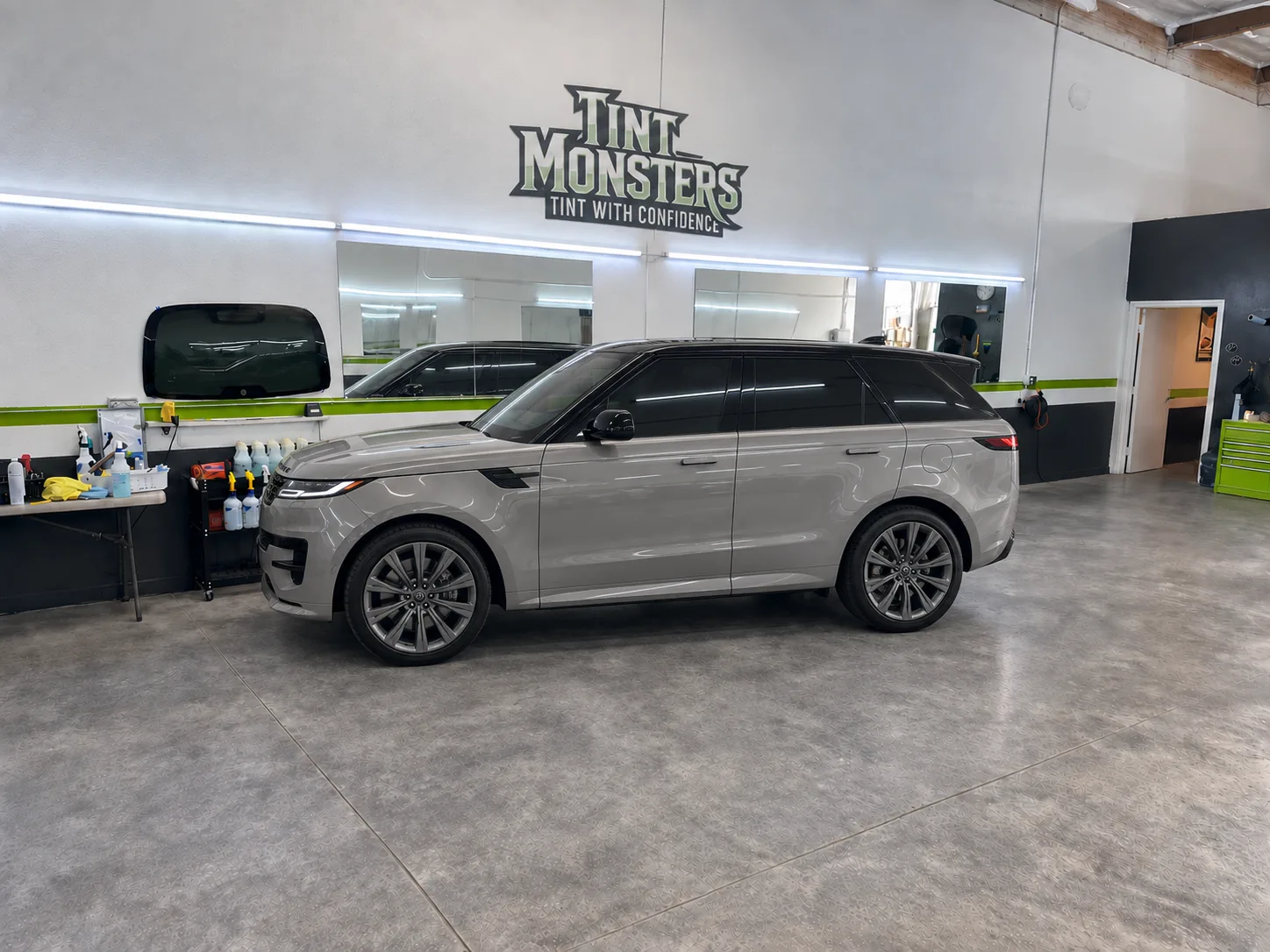
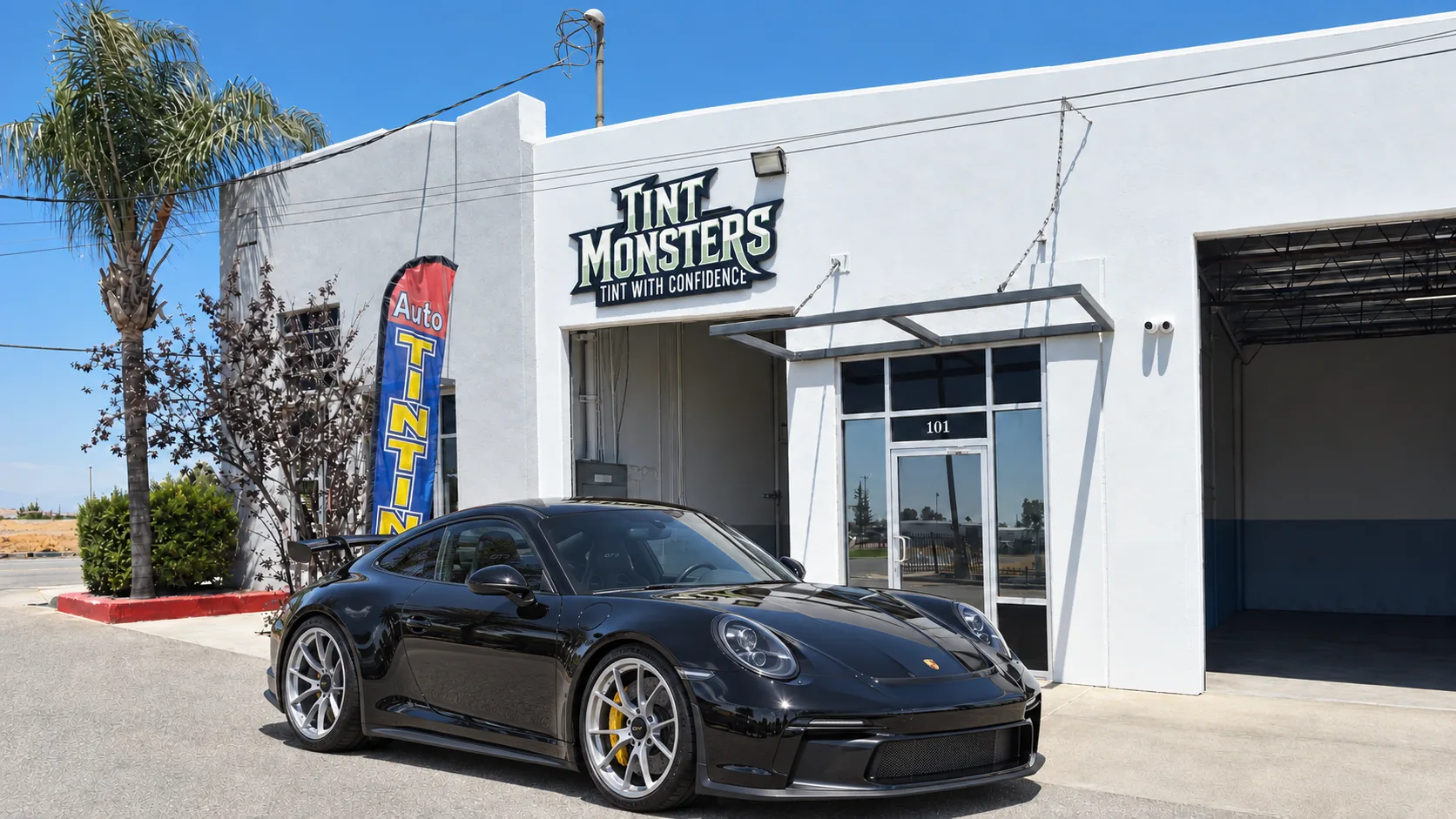
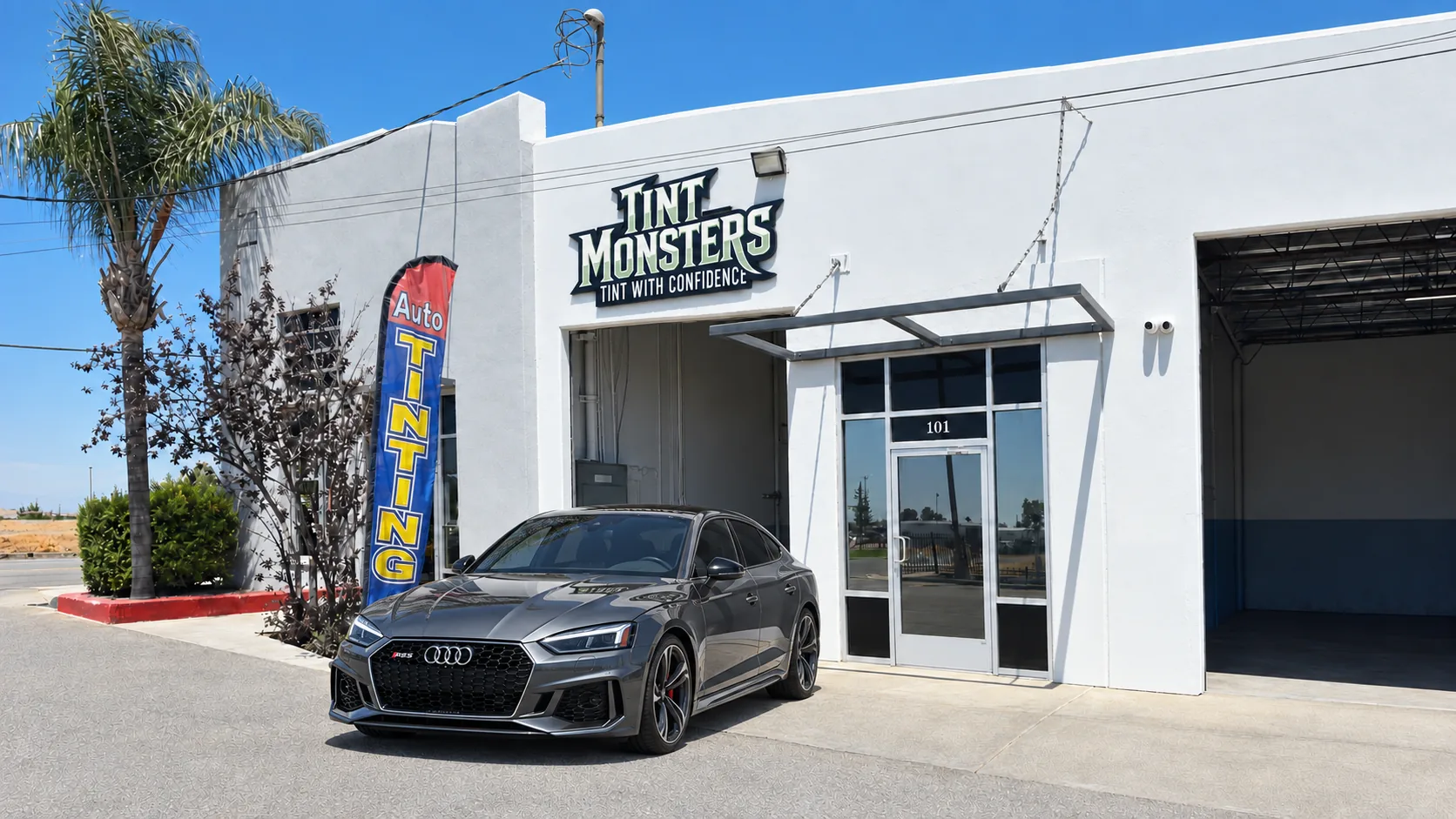
Cars, trucks, SUVs and Teslas are tinted indoors here, by appointment, in Union Carbon IR or Ceramic IR.
See all our work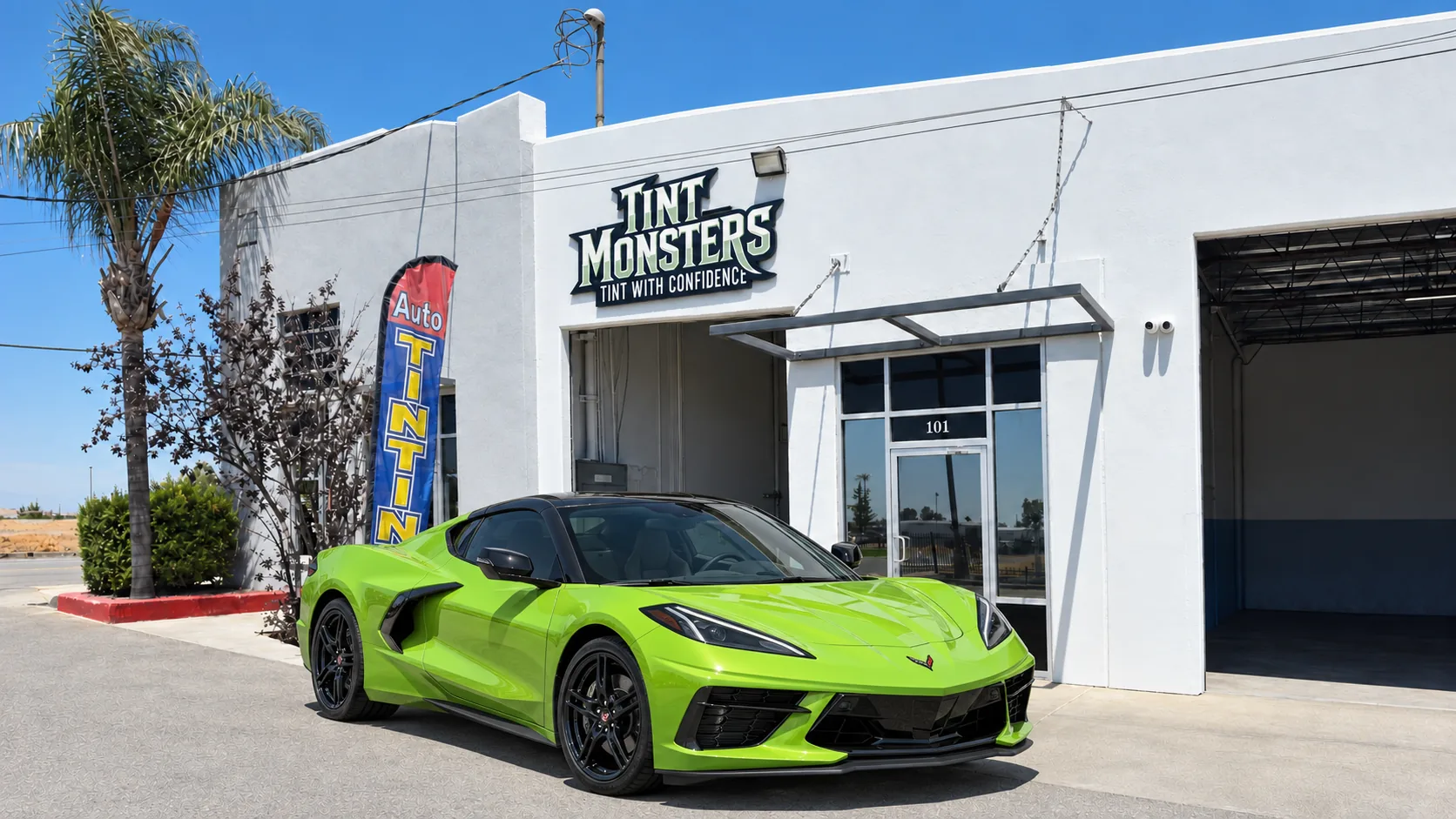
How it works
Send the year, make and model and the windows you want in ceramic, or call (951) 546-8081. We’ll explain Ceramic IR and Carbon IR and send you a price.
Pick a look from 5% to 70%. We’ll explain what California allows on the front doors before anything is cut.
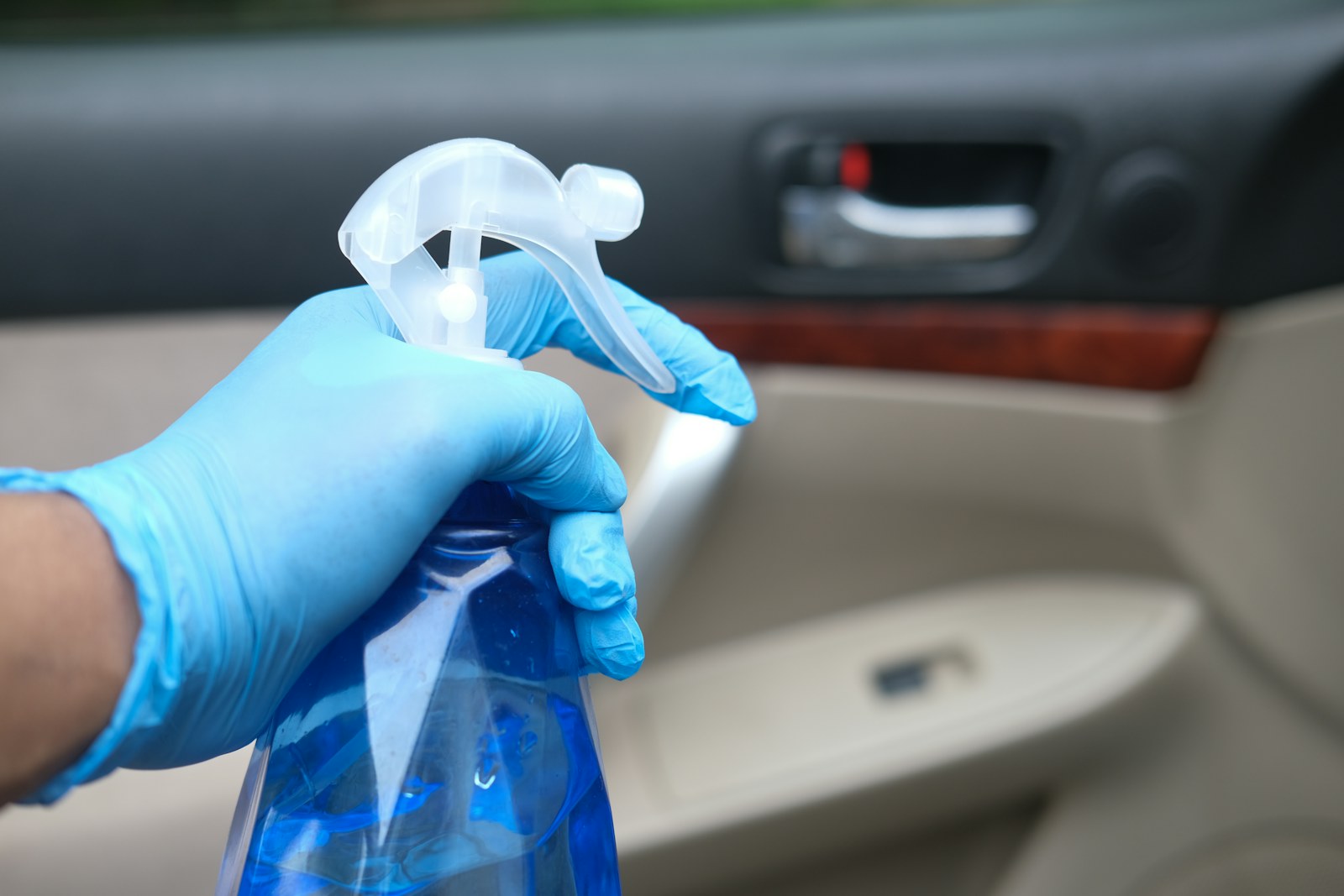
We clean the glass, shape the film to each window and fit it from the inside at our Menifee shop.
Keep the windows up for a week. Ceramic can take a little longer to dry than thinner films, so haze in the first days is normal.
Google reviews
They did a awesome job, i got heat prevention all around, and all my windows tinted. Yes also the windshield. The guy was real friendly, i didnt have a ride back to the house and i didnt want to uber home, so i came prepared to wait the whole 3 hours, he kept me uo to date on the eta, and also told me i can relax and watch the tv if i wanted. I had my switch, so i just played smash bros while i waited and walked to the gas station near by.
I recently took my new Ford Maverick in for window tinting and had an incredible experience. The owner really took the time to explain the technical differences between the various grades of film. What really sold me was the heat lamp demonstration—he showed the actual UV protection and heat rejection of each grade in real-time. We were originally planning on a lower-grade tint, but seeing that demo made it a no-brainer to opt for the higher-grade protection. The installation is flawless, the truck looks awesome, and it is already making a huge difference in the heat. If you want a pro who actually educates his customers, this is the place!
Went in for a windshield repair for a significant rock strike that immediately spiderwebbed to an inch across, that was in a difficult area towards the corner of my windshield. What I admired most was the 100% honest disclaimer this would not likely be a full repair but a repair meant to stop further progression. I have had many rock strikes and windshield replacements over the years and I knew a full repair was unlikely. The repair was done quickly and at a very fair price. The repair was much more complete than I expected. Highly recommended and will return.
Adriana at tint monsters was absolutely amazing! She was quick, professional, and incredibly polite throughout the whole experience. Everything was smooth from start to finish, and her work speaks for itself. On top of that, she has such a great, friendly vibe definitely made the visit even better. Highly recommend Adriana and Tiny Monsters to anyone looking for top-quality service!
Ceramic tinting usually costs from $350 to $1,000. The price depends on your vehicle, how many windows you want in ceramic and whether old film has to come off first, and we’ll explain Ceramic IR and Carbon IR side by side.
No. Union Ceramic IR has no metal in it, so it won’t interfere with your phone, GPS, radio or keyless entry. Signal problems came from older metallic films. That makes ceramic a good match for newer cars and EVs that rely on wireless connections for maps, music and phone keys.
If heat is what bothers you most, it usually is: Union lists Ceramic IR at 87% infrared rejection to Carbon IR’s 75%, and 65% total solar energy rejected to 61%. If you mainly want privacy and a sharper look, Carbon IR may be all you need. Both block 99.99% of UV and carry the lifetime warranty. Figures vary with shade and glass.
Yes. The ceramic layer works on infrared heat rather than on how dark the glass looks, so a lighter shade can still make the cabin noticeably more comfortable. A darker shade adds privacy and cuts more glare. The exact figures change from shade to shade and with your glass, so ask us about the shade you’re considering.
In California the front side windows take clear, colorless UV film, because they must let at least 70% of light through, glass and film together — and it still blocks UV and turns away heat. Behind the front doors any shade is allowed if the car has outside mirrors on both sides. We’ll explain your options; the full rules are on our tint-law page.
Usually a few days in warm, sunny weather and longer when it’s cool or damp. Ceramic can take a little longer than thinner films. Some haze or small water pockets while it dries is normal — leave them alone and they clear as the moisture evaporates.
A full week after we fit the film. Lowering a window too soon can catch the top edge before the film has bonded and make it peel, especially while the weather is cool and curing is slower. After that week, use the windows as normal.
Call the Menifee shop on (951) 546-8081 or get a free quote online.
Free, no-obligation quote
Tell us about your car, home or business, and the Menifee shop will come back to you with a clear price.
Ceramic window tint usually costs from $350 to $1,000. The price depends on your vehicle and the ceramic film you choose.
Yes, if heat matters to you. Ceramic film keeps more heat out without having to look darker: Union Ceramic IR blocks up to 87% of infrared heat, against 75% for Union Carbon IR.
No. Ceramic film has no metal in it, so phones, GPS and radio work as normal.
Most cars take 2 to 4 hours. Taking off old tint first can add an hour or two.
Yes. Union car film comes with Union’s limited lifetime warranty against bubbling, peeling and fading on qualifying installs.
In California, the front side windows can only take clear UV film, which still cuts heat, and the rear side windows and back window can take any shade. We check the law for your car before we start.


